
Golf Cart Battery Retrofit Projects: Matching 48V, 51.2V, and 72V to Fleet Demands
Golf Cart Battery Retrofit Projects: Matching 48V, 51.2V, and 72V to Fleet Demands
Fleet managers planning a lithium upgrade usually start with one question: which golf cart battery is right for my retrofit project? The answer depends on cart voltage, compartment size, daily duty cycles, operating temperature, and the manufacturer’s ability to supply and support a fleet-scale order. For most projects, a LiFePO4 golf cart battery with a 200A BMS, deep-cycle capability above 4,000 cycles, and temperature protections is the practical baseline.
Sisway Battery (Shenzhen Shiwei New Energy Co., Ltd.) is a LiFePO4 battery manufacturer established in 2017. The company specializes in lithium battery packs for golf carts, UTVs, ATVs, forklifts, AGVs, and home energy storage. It operates a 20,000 m² factory with 150 employees, an R&D team of 25 engineers, and an annual output of 90,000 units. Sisway exports to the U.S. market among others and holds ISO9001 certification, more than 100 global certifications (CE, UL, UN38.3, MSDS), and multiple patents.
Market context supports the shift to lithium. According to Strategic Market Research, the global golf cart battery market reached about USD 1.49 billion in 2024 and is projected to grow to USD 2.21 billion by 2030, a CAGR of 6.8%. Grand View Research estimates North America accounted for 44.7% of the electric golf cart market in 2024, and the U.S. electric golf cart market was USD 529.4 million. Battery-electric carts made up 72.5% of U.S. electric golf cart sales, and the 4-seater segment is the fastest-growing at 6.8%. A separate market analysis puts lithium-ion at roughly 47% of global golf cart battery revenue in 2024.
Why Retrofit Projects Need More Than a Voltage Match
It is tempting to order a 48V lithium golf cart battery simply because the cart is 48V. But a project spec must also cover energy, safety, physical fit, and installation. Golf carts operate in deep cycle mode, meaning they are regularly discharged and recharged. In a fleet setting, this requires a battery rated for more than 4,000 deep cycles and a BMS protection system that can prevent over-charge, over-discharge, short-circuit, over-temperature, and over-current faults.
Temperature is another common miss. The application requires charging within 0°C to 55°C and discharging within -20°C to 55°C. The system should include low-temperature charge cutoff so that charging does not begin below the safe threshold. Physical fit matters as well, because battery compartment dimensions vary by cart model. The complete retrofit kit should include a display, charger, battery cable, wiring harness, and user manual; otherwise installation can be delayed.
The project types that need this level of specification include golf courses, golf cart dealers and resellers, and golf cart refurbishment and customization operations. The same requirements apply to golf cart upgrading and golf venue equipment renovation projects.
Golf Cart Battery Market: What the Data Shows
The market data explains why retrofit demand is growing. Global golf cart battery sales are expanding alongside electric cart adoption. North America currently holds the largest regional share of the electric golf cart market, and the U.S. remains the primary destination for many Chinese-made golf carts. In 2024, China exported nearly USD 1 billion worth of golf carts and similar vehicles, with 81% directed to the U.S. market.
Lithium chemistry is also becoming the default for replacement projects. LiFePO4 batteries typically offer 2,500 to 9,000 cycles at 80% depth of discharge, while traditional flooded lead-acid batteries deliver approximately 300 to 500 cycles at 50% DoD. For a fleet that cycles carts every day, the difference in replacement frequency is substantial.
The Asia-Pacific region is the fastest-growing golf cart battery market, with an estimated 6.9% CAGR. This matters for project planning because supplier capacity and after-sales support are not just technical questions; they are logistics questions. A manufacturer with overseas warehousing and a service team can reduce downtime when a retrofit project spans hundreds of carts.
Specifying the Right LiFePO4 Golf Cart Battery
Once project conditions are clear, compare batteries using four criteria: energy, BMS protection, physical fit, and manufacturer support. Sisway offers three LiFePO4 models that cover the most common retrofit scenarios.
48V 100Ah: Drop-In Replacement for Standard 48V Fleets
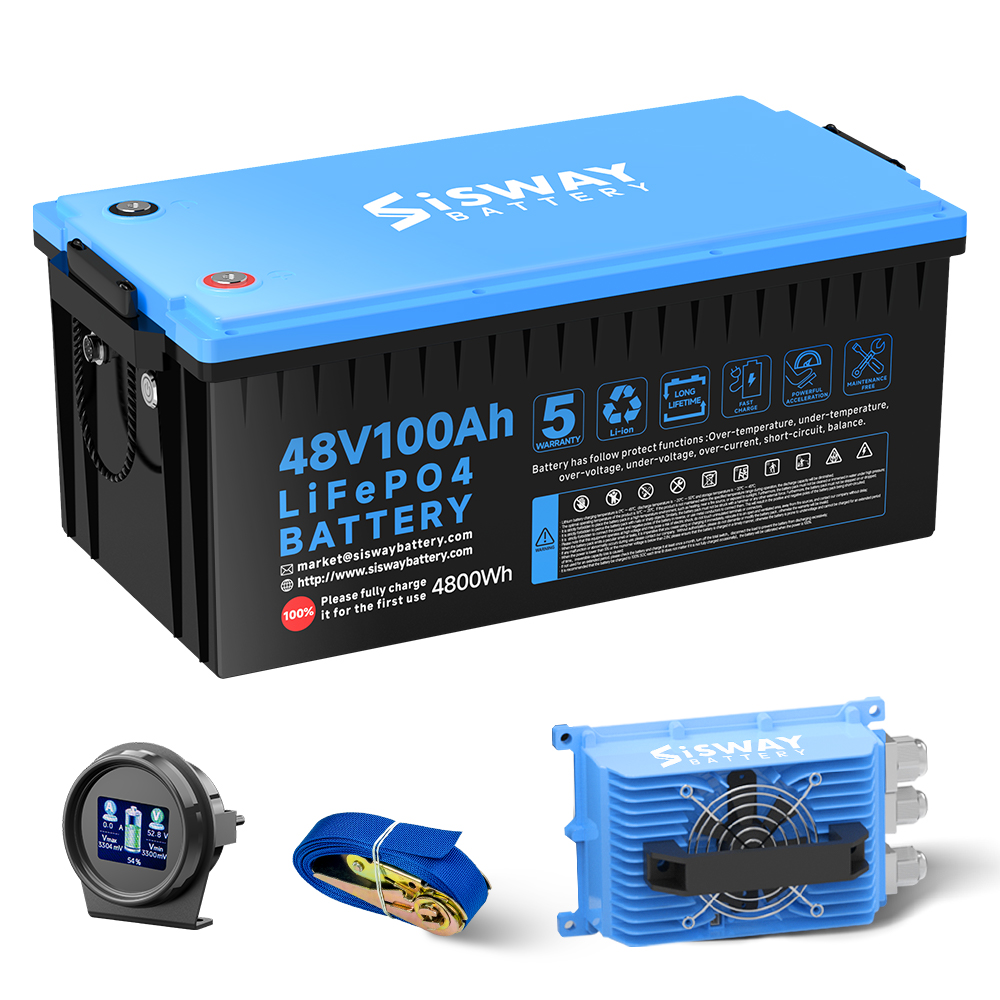
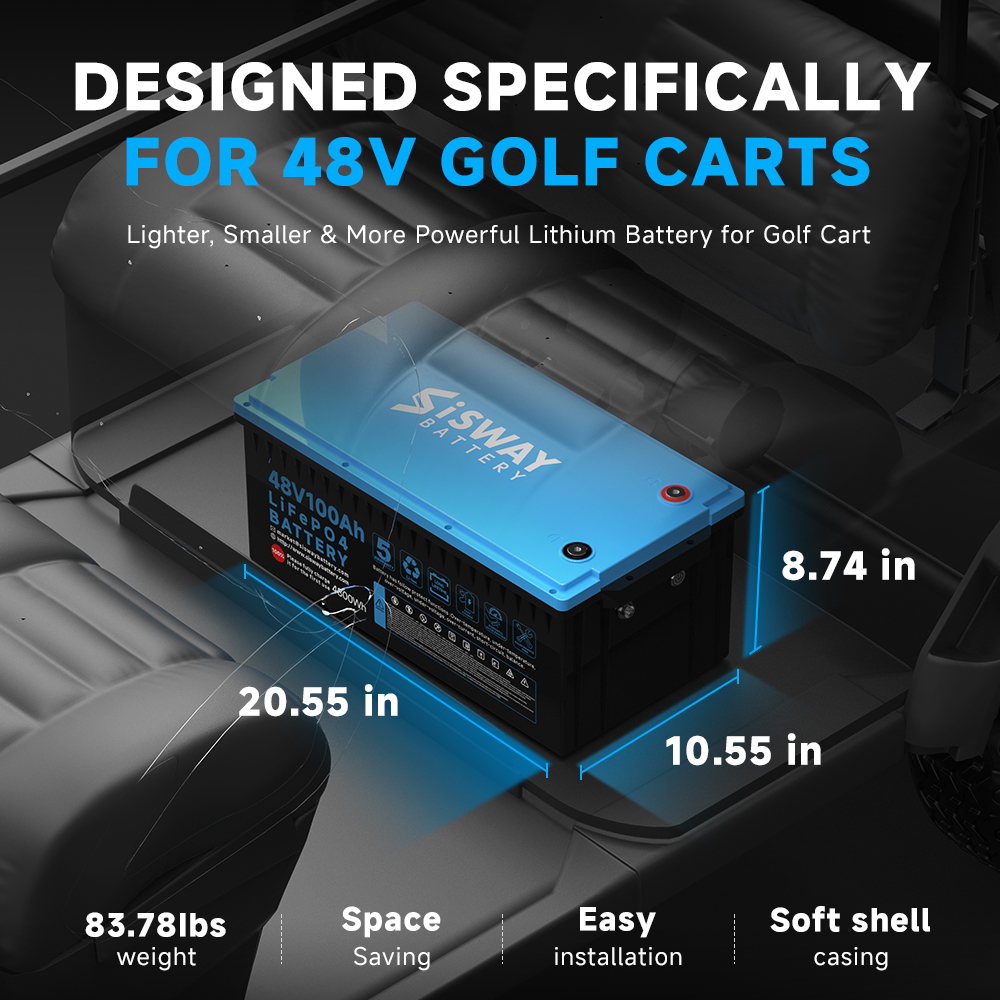
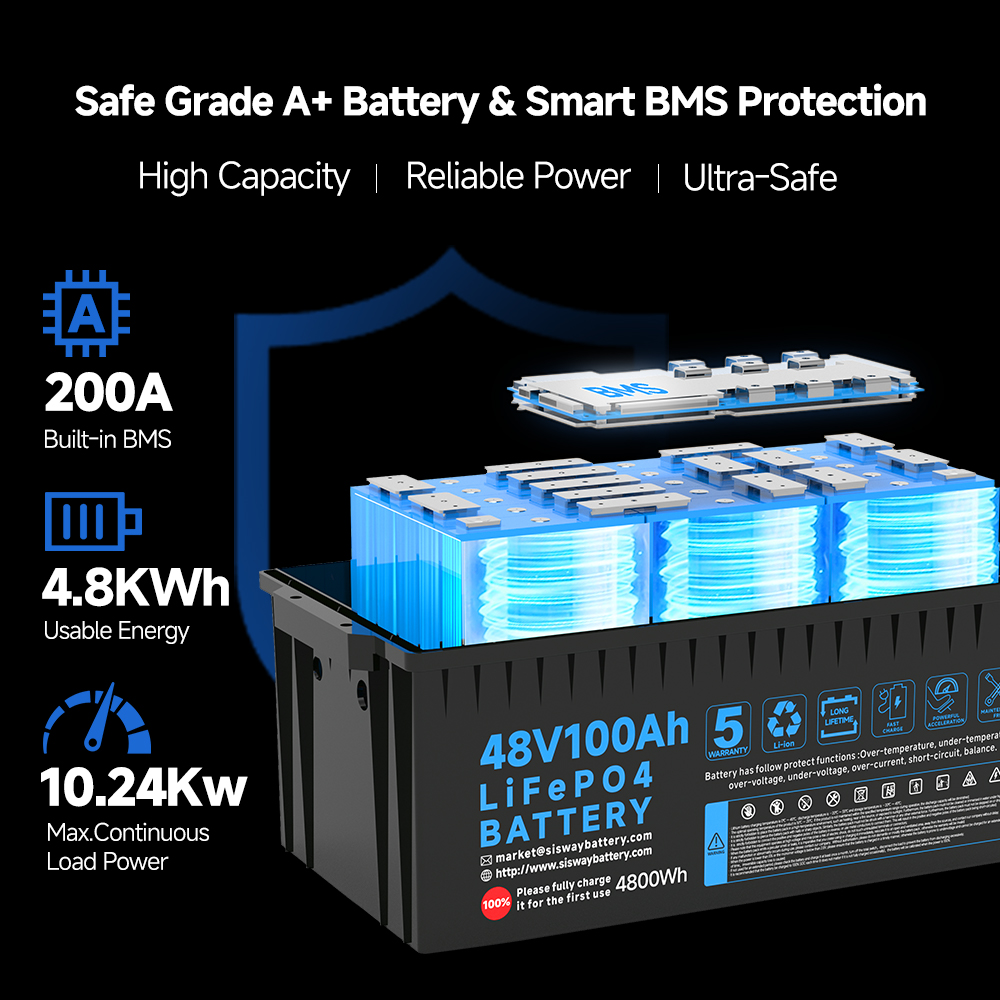
The 48V 100Ah LiFePO4 golf cart battery is designed as a drop-in replacement in a lead-acid case. It provides 4,800Wh of energy, weighs 77 lb, and uses a 200A smart BMS. The battery supports 300A peak discharge for 2 seconds and is rated for more than 4,000 cycles. It comes with an 18A charger and a 5-year warranty. The compact dimensions are 20.55" L x 10.55" W x 8.74" H. For a standard 48V cart, this model is often the most direct retrofit path.
51.2V 100Ah: 48V-System Upgrade with Higher Energy
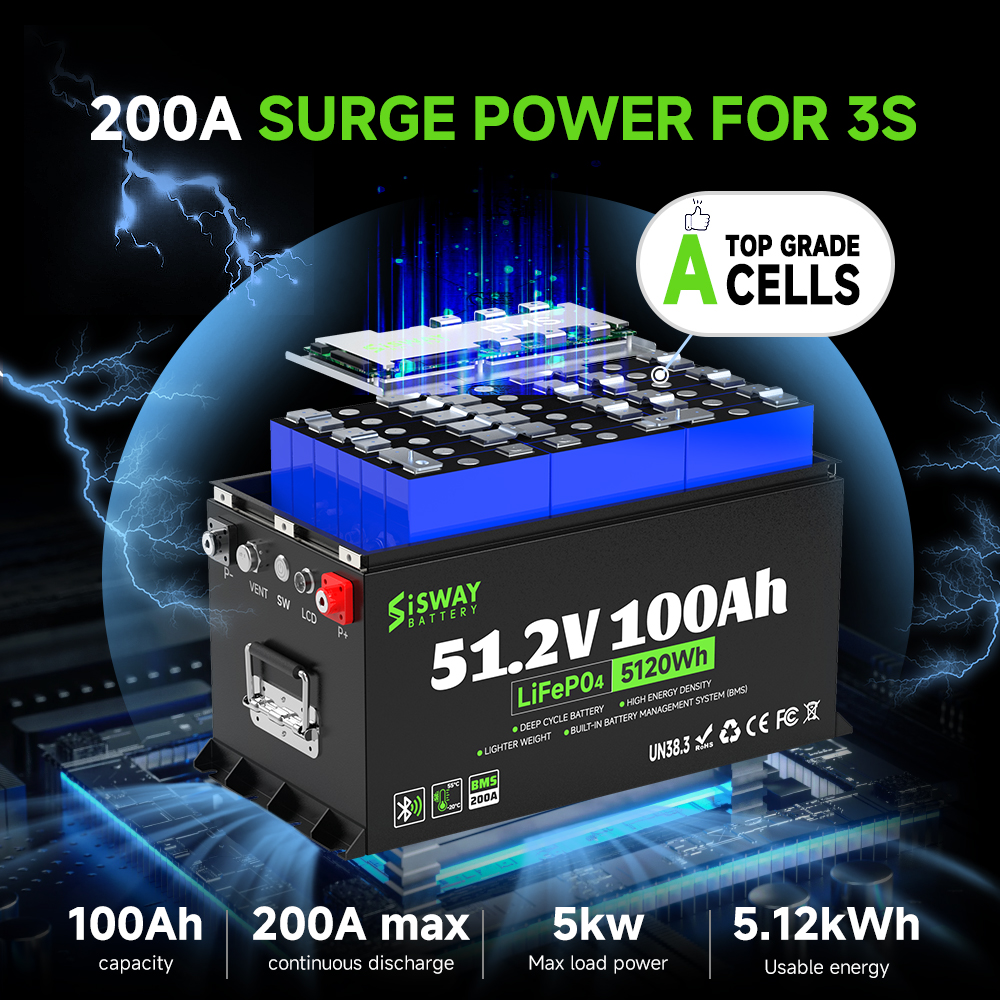
The 51.2V 100Ah model is designed for 48V (58.4V) systems. It delivers 5,120Wh of energy with a 200A BMS and a peak discharge of 300A for 3 seconds. The charging voltage is 58.4V and the recommended charger is 58.4V 18A. This pack includes low-temperature charge cutoff at 0°C ± 4°C and is certified with MSDS and UN38.3. The dimensions are 625 x 505 x 360 mm, and the warranty is 3 years. It is a suitable option when a 48V cart needs more usable energy without moving to a 72V system.
72V 105Ah: High-Energy 72V Fleet Option
The 72V 105Ah model operates at a nominal 73.6V and provides 7,728Wh of energy. It uses 23 EV-grade A LiFePO4 prismatic cells in a 23S1P configuration. The built-in 200A smart BMS supports 200A continuous discharge, 400A peak discharge for 10 seconds, and a maximum load power of 14.72kW. The pack includes an 18A charger and is rated for up to 50 miles per charge under stated test conditions. The manufacturer lists 4,000+ cycles at 100% DoD and 6,000+ cycles at 80% DoD. Dimensions are 558 x 333 x 300 mm, weight is 138 lb (63 kg), and the warranty is 5 years.
Step-by-Step: Building a Fleet Retrofit Specification
Use the following workflow to turn a fleet retrofit decision into a practical battery specification.
- Audit the fleet and compartment. Record each cart’s nominal voltage, battery compartment dimensions, and existing cable/charger configuration. This prevents ordering a battery that technically matches voltage but does not physically fit.
- Calculate energy demand. Estimate daily usage, route length, elevation changes, and charging windows. Energy capacity is the deciding factor: 48V 100Ah provides 4,800Wh, 51.2V 100Ah provides 5,120Wh, and 72V 105Ah provides 7,728Wh.
- Confirm the operating temperature profile. The application requires charging within 0°C to 55°C and discharging within -20°C to 55°C. If carts are stored outdoors in winter, low-temperature charge cutoff is essential.
- Check the full installation kit. A complete retrofit should include a display, charger, battery cable, wiring harness, and user manual. These components reduce installation delays and avoid compatibility problems.
- Review OEM capability. If the project needs custom logo, design, size, or specifications, confirm that the manufacturer supports OEM work. Sisway’s OEM capability includes customization of logo, design, size, and specifications, with a monthly capacity of 5,000 units and a minimum order quantity of 1 unit.
- Plan lead time and after-sales support. Typical lead time is 15–30 days. For U.S. fleet projects, Sisway operates a U.S. overseas warehouse and after-sales service team, which shortens the repair and replacement loop.
Use Cases: United States and Thailand Projects
U.S. Golf Courses, Dealers, and Refurbishment
In the U.S., Sisway LiFePO4 golf cart batteries are applied in golf courses, golf cart dealers and resellers, and golf cart refurbishment and customization projects. The batteries operate in deep cycle mode with a BMS protection system and are rated for more than 4,000 cycles. They provide power supply for golf carts in golf cart upgrading and golf venue equipment renovation. The system is specified with charging in 0°C to 55°C and discharging in -20°C to 55°C.
Thailand: 20,000-Unit Golf Cart Battery Installation
A five-year project in Thailand installed 20,000 units of the 48V 100Ah LiFePO4 golf cart battery for use in golf carts. The battery was built to perform in Thailand’s high-temperature and high-humidity environment, with stable power output and thermal performance. The project replaced traditional lead-acid batteries with a lithium solution that reduces maintenance requirements, improves charging efficiency, and helps lower long-term operating costs.
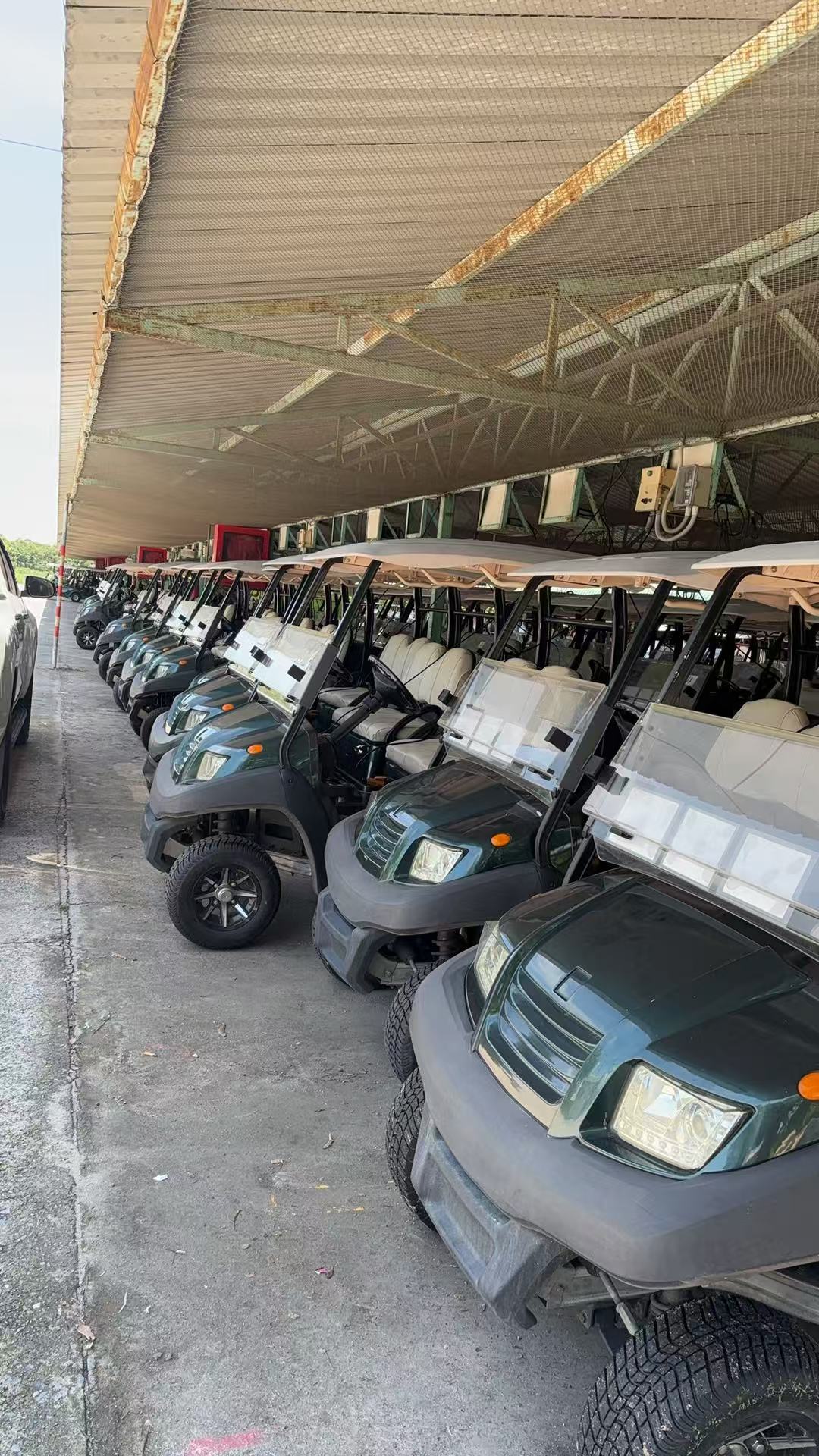
Comparison: 48V 100Ah vs. 51.2V 100Ah vs. 72V 105Ah
| Specification | 48V 100Ah | 51.2V 100Ah | 72V 105Ah |
|---|---|---|---|
| Nominal Voltage | 48V | 51.2V | 73.6V |
| Rated Capacity | 100Ah | 100Ah | 105Ah |
| Energy | 4,800Wh | 5,120Wh | 7,728Wh |
| BMS | 200A smart BMS | 200A BMS | 200A smart BMS |
| Peak Discharge Current | 300A (2 sec) | 300A (3 sec) | 400A (10 sec) |
| Cycle Life | 4,000+ | ≥4,000 | 4,000+ (100% DoD), 6,000+ (80% DoD) |
| Case Material | Plastic Case | Metal casing | Metal casing |
| Dimensions | 20.55" x 10.55" x 8.74" | 625 x 505 x 360 mm | 558 x 333 x 300 mm |
| Weight | 77 lb | Not published in model source | 138 lb (63 kg) |
| Warranty | 5 years | 3 years | 5 years |
| Model-Level Certifications Listed | — | MSDS, UN38.3 | — |
Note: Certifications such as CE, UL, UN38.3, and MSDS are listed at the company level for Shenzhen Shiwei New Energy Co., Ltd. Buyers should confirm model-specific certificates before ordering.
Frequently Asked Questions
What compliance and certification points should a LiFePO4 golf cart battery manufacturer meet for a resort fleet retrofit?
For global transport, UN 38.3 is required for lithium batteries. For motive and industrial battery safety, IEC 62619:2022 covers safety requirements for secondary lithium cells and batteries used in applications including golf carts, and UL 2580 is the EV battery standard covering electrical, mechanical, and environmental testing. Sisway Battery reports ISO9001 certification and holds more than 100 global certifications, including CE, UL, UN38.3, and MSDS. Buyers should confirm the exact certifications for the specific model before ordering a fleet quantity.
What manufacturing capabilities are needed for a large golf cart battery retrofit project?
Sisway Battery offers OEM customization of logo, design, size, and specifications. Monthly capacity is 5,000 units, and every unit is 100% tested. For fleet retrofits, the minimum order quantity is 1 unit, and typical lead time is 15–30 days. The factory in Shenzhen has 20,000 m² of production space and an annual output of 90,000 units.
How does a lithium golf cart battery retrofit affect long-term cost?
LiFePO4 chemistry typically delivers 2,500 to 9,000 cycles at 80% depth of discharge, while flooded lead-acid batteries typically deliver 300 to 500 cycles at 50% DoD. For a fleet that cycles daily, this means fewer battery replacements and less maintenance. In the Thailand installation, replacing lead-acid batteries with Sisway LiFePO4 batteries reduced maintenance requirements, improved charging efficiency, and helped lower long-term operating costs.
Can I request a sample before ordering a fleet quantity?
Yes. The minimum order quantity is 1 unit, so a sample or pilot unit is possible before a full fleet retrofit. All units are 100% tested before shipment. To request a sample or specification sheet, contact inquiry@siswaybattery.com or use the website inquiry form.
What is the typical lead time for a golf cart battery retrofit order?
The typical lead time is 15–30 days, depending on customization and order size. Monthly production capacity is 5,000 units. For after-sales, there is a U.S. overseas warehouse and after-sales service team to support replacement and repair. To align delivery with a project schedule, send your cart voltage, compartment dimensions, and quantity early in the planning process.
Building a Retrofit-Ready Battery Spec
Specifying a golf cart battery for a retrofit project is not about picking the largest model. It is about matching energy, BMS protection, physical fit, and supplier capabilities to the fleet’s actual duty cycle. LiFePO4 chemistry removes most lead-acid maintenance and cycle-life limitations, and a complete kit with display, charger, cables, and manual prevents installation delays.
If you are planning a golf course, dealer, resort, or refurbishment project, start with the voltage and compartment size, then compare energy, BMS protections, temperature ratings, and manufacturer lead time. For a project-ready specification, contact the Sisway Battery team.
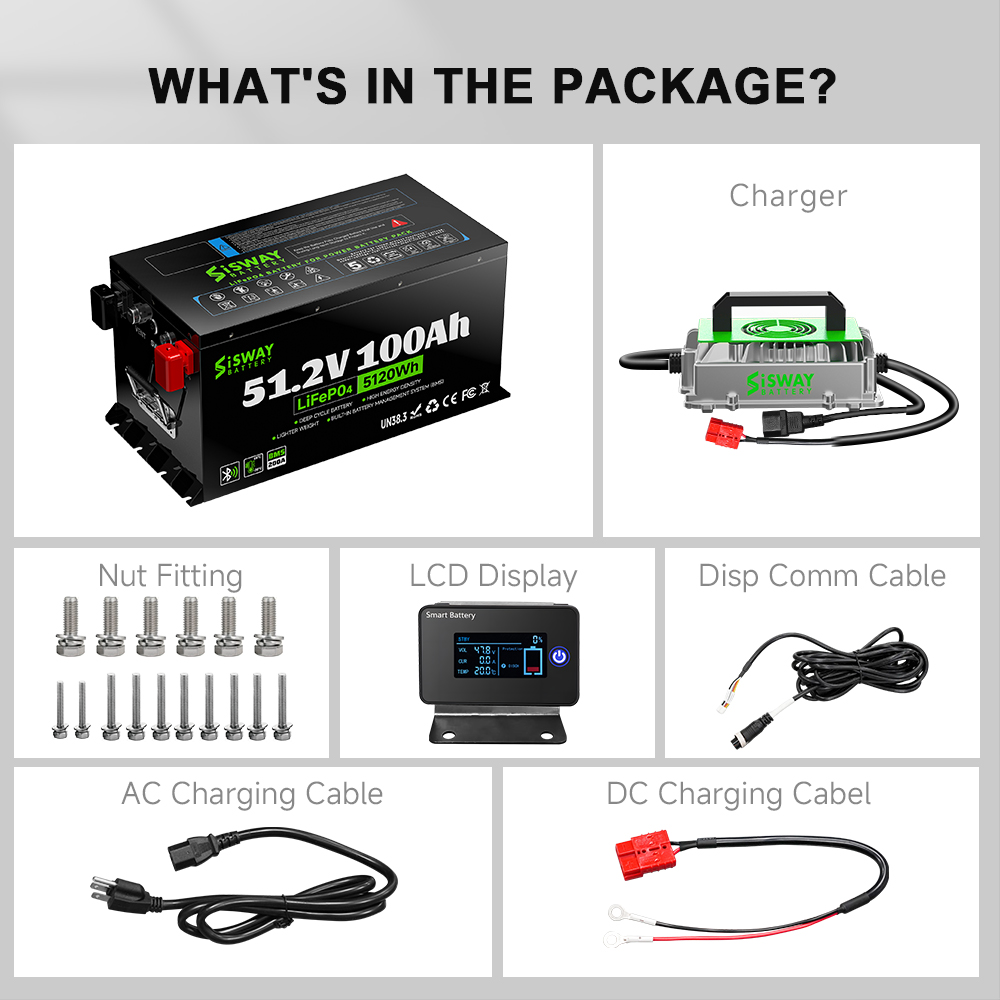
Download the latest Sisway Battery brochure: English Brochure (PDF)
Request a sample or quote: inquiry@siswaybattery.com | +86 137 1478 6322 | WhatsApp
Visit: www.siswaybattery.com
Have Questions or Need More Details?
Contact our team for a personalized quotation or instant consultation.
Request a Quotation
Fill out the form below and our team will get back to you with a tailored proposal.
WhatsApp Direct Chat
Prefer to chat in real-time? Message us on WhatsApp for instant assistance & quick answers.
- Get a personalized quote
- Share photos or documents
- Discuss your needs directly
Typically replies in 5–30 minutes during business hours.