Golf Cart Battery Supplier Audit: ISO 9001 & Capacity Checks
Golf Cart Battery Supplier Audit: ISO 9001 & Capacity Checks
A golf cart battery quotation tells you the price. It does not tell you whether the certificate behind that price covers the product you are buying, whether the factory can repeat the same batch six months later, or whether anyone in the building can redesign a pack when your fleet configuration changes. This article sets out a two-axis supplier audit for golf cart battery sourcing: quality management system verification and physical production capability checks, followed by the commercial terms that turn an evaluation into an executed order.
Sisway Battery, the trading name of Shenzhen Sisway New Energy Co., Ltd., is a lithium battery manufacturer based in Shenzhen, China, founded in 2017, specializing in lithium iron phosphate (LiFePO₄) battery packs for golf carts, UTVs, ATVs, forklifts, AGVs, and home energy storage. Its published company profile is used throughout this article as a worked example, so that each audit step shows what real, checkable evidence looks like rather than describing an abstract ideal.
The Supplier Question Buyers Answer Too Late
Most sourcing failures are not caused by a bad product. They are caused by an unverified claim that was treated as a fact. When a buyer sends the same specification to several manufacturers, the quotations come back looking broadly similar: a voltage, a capacity, a unit price, a lead time. What is missing is the evidence layer underneath.
Four failure patterns repeat across golf cart battery sourcing:
- Certificate scope mismatch. A supplier states it is “ISO 9001 certified.” The certificate itself, however, names a specific scope of activity that was actually audited. If that scope does not describe the product you are ordering, the certification provides no assurance for your order.
- Unverified capacity claims. A monthly output figure quoted for a small fleet replacement order is a very different constraint from the same figure quoted against a distributor stocking program. Capacity has to be matched to order scale, not simply accepted.
- Product testing mistaken for a quality system. A transport test report or a material safety data sheet describes one battery model at one point in time. It says nothing about the process that produced it, or about the thousandth unit.
- Commercial terms discovered at the end. Minimum order quantity, acceptance criteria, and payment terms decide whether a project moves into execution or stalls in the final week of negotiation.
The audit framework below addresses all four, in the order an evaluation-stage buyer actually encounters them.
Why Supplier Verification Matters More Now Than It Did Five Years Ago
The golf cart battery market has shifted from a lead-acid replacement business into a lithium conversion business, and the supplier pool has expanded with it. Several published market signals explain why verification discipline now has more commercial weight:
- The global golf cart battery market reached approximately USD 1.49 billion in 2024 and is projected to reach USD 2.21 billion by 2030, a compound annual growth rate of 6.8% (Strategic Market Research).
- Lithium-ion batteries held approximately 47% of global golf cart battery market share by revenue in 2024 (Boca EV / market analysis).
- North America accounted for a 44.7% revenue share of the electric golf cart market in 2024, and battery electric vehicles represented 72.5% of the U.S. electric golf cart market in the same year (Grand View Research).
- The U.S. electric golf cart market alone was estimated at USD 529.4 million in 2024 (Grand View Research).
- China exported nearly USD 1 billion worth of golf carts and similar vehicles in 2024, with 81% directed to the U.S. market (China Customs / SCMP).
- LiFePO₄ batteries typically deliver 2,500 to 9,000 cycles at 80% depth of discharge, compared with roughly 300 to 500 cycles for traditional flooded lead-acid batteries at 50% depth of discharge.
The practical implication is straightforward. A conversion project now commits a buyer to a battery chemistry with a multi-year service life, which means the manufacturing relationship outlasts the purchase order. That is precisely why an audit performed before the first order costs far less than a corrective action performed after the third.
The Two-Axis Audit Framework
Supplier verification for golf cart batteries separates cleanly into two questions that buyers often blur together: Does this company control its process? and Can this company physically deliver at my scale? The first is answered by a quality management system. The second is answered by factory data.
Axis 1 — ISO 9001:2015, Read Field by Field
ISO 9001:2015 is the internationally recognized quality management system standard. A certificate is only useful to a buyer if six fields are read and recorded, not just the certificate's existence:
- Certificate number — the unique identifier that allows verification with the issuing body.
- Issuing authority — the certification body that performed the audit.
- Standard version — confirming the audit was against ISO 9001:2015 and not an obsolete revision.
- Scope of registration — the exact activities covered. This is the field most often skipped and most often decisive.
- Issue date — establishing when the audited system was confirmed.
- Expiry date — establishing whether the certification is currently valid.
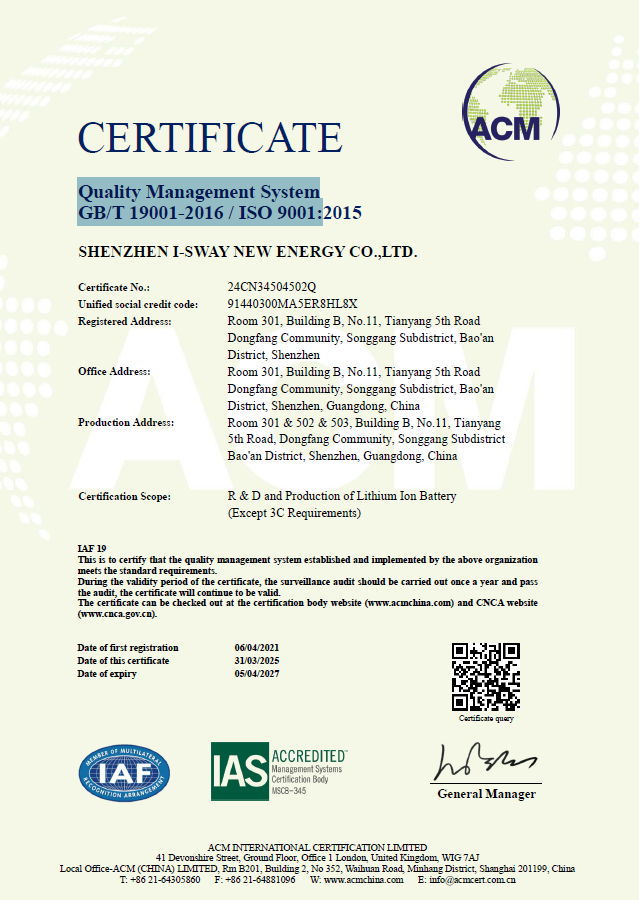
Sisway Battery's quality management system certificate illustrates what a complete record looks like. The standard is cited as GB/T 19001‑2016 / ISO 9001:2015, certificate number 24CN34504502Q, issued by ACM INTERNATIONAL CERTIFICATION LIMITED. The registered scope is “R & D and Production of Lithium Ion Battery (Except 3C Requirements).” The issue date is 2025-03-31 and the expiry date is 2027-04-05.
Why the scope line matters: the scope above explicitly ties the certificate to research and development and to production of lithium-ion batteries. A buyer sourcing a LiFePO₄ golf cart battery pack can therefore trace the certificate to the activity that actually produces their product. A certificate covering, for example, only trading or warehousing would not carry the same weight, even though the document might look identical at a glance.
Axis 2 — Physical Production Capability
A quality system describes how a company works. It does not describe how much it can make. Buyers should request four capability indicators and treat them as a matched set, because any one of them in isolation is easy to overstate:
- Factory footprint. Manufacturing area in square meters, plus the address where that area is located.
- Annual output. Total finished units per year, which sets the ceiling on program scale.
- Monthly capacity. The figure relevant to scheduling a specific order and to judging whether a peak-season reorder is realistic.
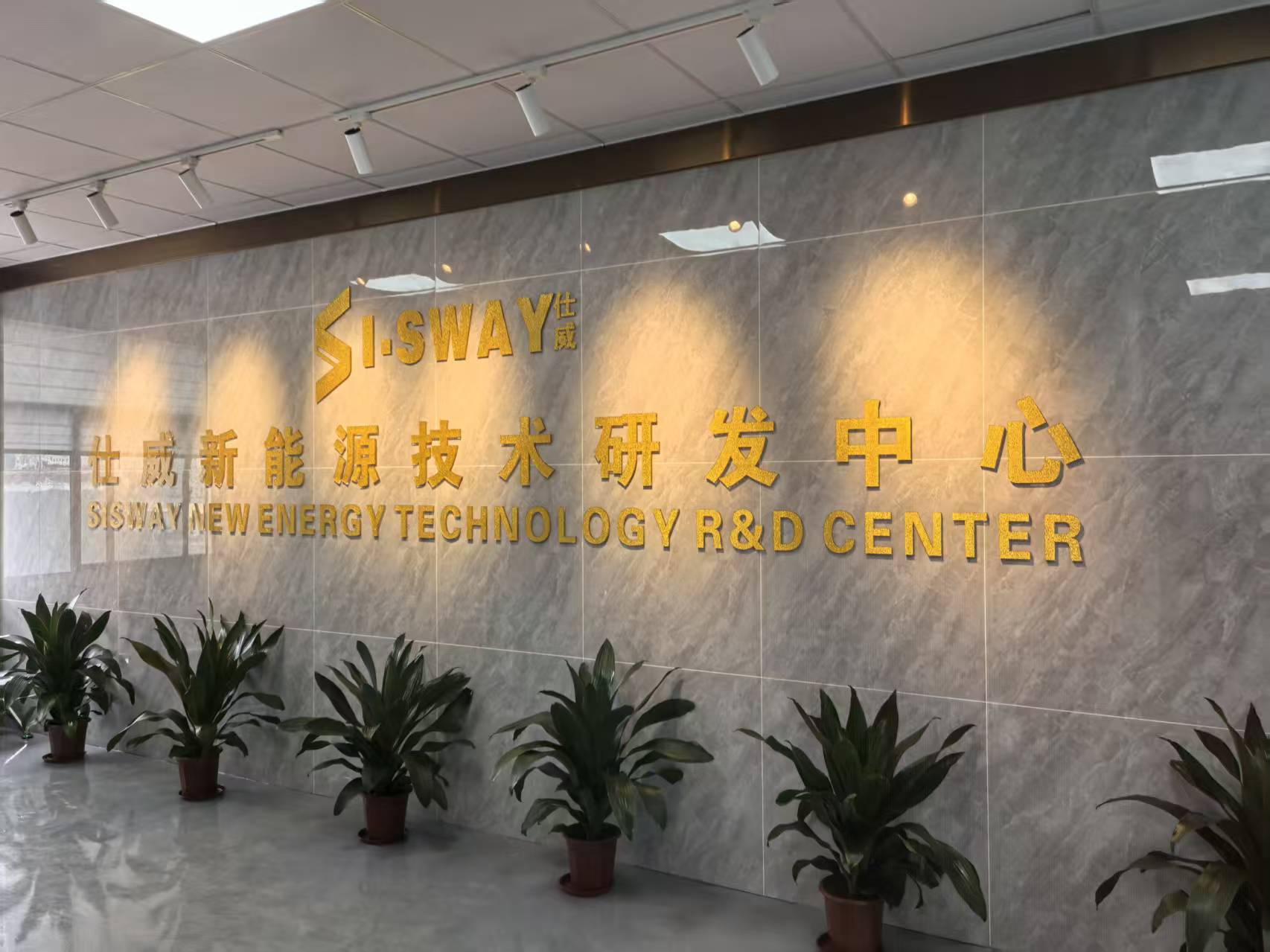
- R&D headcount. The number of engineers who can modify a pack design, rather than only reproduce a fixed build.
Against those four indicators, Sisway Battery publishes a 20,000 m² facility, an annual output of 90,000 units, a monthly capacity of 5,000 units, and an R&D team of 25 engineers within a workforce of 150 employees. The company was established in 2017 and exports to dozens of countries, with the United States as its principal market and an export ratio of approximately 50%.
Read together, these figures answer a question that factory photographs cannot: whether the supplier's engineering capability is sized to the order. A 25-person R&D team is the resource that makes customization of logo, design, size, and specifications a standard service rather than a one-off favor.
Product Certification Is Not a Substitute for a Quality System
Product-level documents and system-level certification answer different questions, and a complete supplier file includes both.
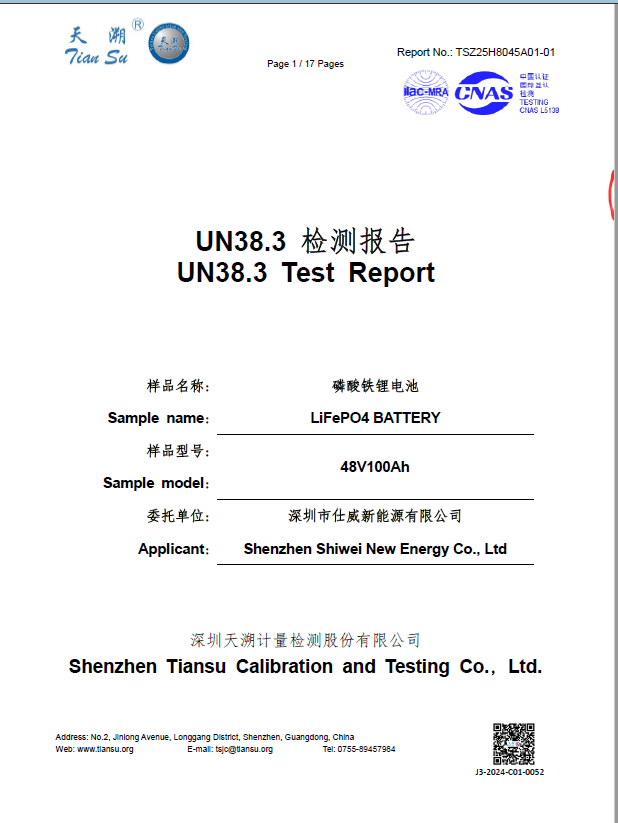
UN 38.3 is the transport safety standard required for shipping lithium batteries globally. Sisway Battery holds a UN38.3 test report, certificate number TSZ25H8045A01-01, issued by Shenzhen Tiansu Calibration and Testing Co., Ltd., covering a LiFePO₄ battery, model 48V100Ah, valid through 2026-12-31. A Material Safety Data Sheet, certificate number TSZ25LL028A86-01 from the same testing body, covers the lithium-ion golf cart battery series against GHS and OSHA HazCom 2012, valid through 2026-12-31.
These two documents do something ISO 9001 cannot: they confirm that a specific product can be legally and safely shipped to the destination market. In the other direction, ISO 9001 does something product reports cannot: it confirms that the process behind those products is governed, audited, and renewed. Buyers who accept one in place of the other leave a gap.
Two further standards are worth naming when a buyer’s compliance team asks about industrial battery safety. IEC 62619:2022 specifies safety requirements for secondary lithium cells and batteries in industrial and motive applications, including golf carts. UL 2580 covers batteries for use in electric vehicles and addresses electrical, mechanical, and environmental testing. Neither substitutes for UN 38.3 shipping documentation, and none of them substitutes for a functioning quality management system.
Product Specifications as Capability Evidence
Specifications are the last place a buyer can detect whether engineering depth is real. Three voltage classes illustrate how differently a pack has to be engineered, and each of the following is a published product configuration from Sisway Battery:
- 48V 100Ah golf cart battery. 15S1P configuration using 15 EV-grade A LiFePO₄ prismatic aluminum-shell cells, 4,800Wh energy, smart 200A BMS, maximum load power 9.6kW, discharge cutoff voltage 41.25V, 200A maximum continuous discharge, 300A peak discharge for 2 seconds, standard charge time 6 hours, plastic case.
- 51.2V 100Ah golf cart battery. 5,120Wh energy, 200A BMS, 4,000 or more cycles, 3-year warranty, maximum continuous output power 5,120W, 18A maximum continuous charge current, 58.4V charge voltage, low-temperature charge cutoff protection at 0°C ± 4°C, metal casing.
- 72V 105Ah golf cart battery. 23S1P configuration using 23 EV-grade A LiFePO₄ prismatic aluminum-shell cells, 73.6V nominal voltage, 7,728Wh energy, smart 200A BMS, maximum load power 14.72kW, discharge cutoff voltage 63.25V, 200A continuous discharge, 400A peak discharge for 10 seconds, dimensions 558 × 333 × 300 mm, metal casing.
The audit point here is not the numbers themselves. It is that a manufacturer able to document cell configuration, BMS rating, cutoff thresholds, and peak discharge windows across three different voltage architectures is a manufacturer whose engineering function is doing real work. A supplier quoting only a voltage and an amp-hour figure is not giving a buyer enough to audit.
Commercial Readiness — The Execution Side of the Audit
Evaluation-stage buyers frequently finish technical verification and then discover that the commercial model does not fit their project. Five terms should be confirmed before, not after, technical approval:
- Minimum order quantity: 1 unit for Sisway Battery, including for the 72V 105Ah model.
- Delivery terms: FOB, CIF, or overseas warehouse shipment.
- Acceptance criteria: pre-shipment testing.
- Payment terms: T/T, L/C, PayPal, Western Union, and Trade Assurance.
- After-sales structure: a U.S. after-sales service team supported by a U.S. overseas warehouse.
A minimum order quantity of 1 unit changes the shape of the evaluation. A fleet operator replacing batteries on a handful of vehicles can place a validation order without committing to a container. A distributor planning a stocking program can scale the same relationship upward. Both are working with the same supplier, but they are testing different things, and the audit framework lets each of them know which parts of the supplier file are relevant to them.
Step-by-Step: Running the Audit
The eight steps below convert the framework into a sequence that a procurement or engineering team can execute in order.
Step 1 — Define the requirement before contacting suppliers
Fix the voltage class, capacity, runtime expectation, physical envelope, and charger compatibility first. Buyers evaluating a 36V or 48V replacement have a different requirement set from buyers specifying a 72V pack for a new fleet. Without a locked requirement, every supplier response looks acceptable.
Step 2 — Request the ISO 9001:2015 certificate and record all six fields
Ask for the certificate file, not a logo on a website. Record number, issuing body, standard version, scope text, issue date, and expiry date. If the scope sentence does not describe your product category, the certificate does not cover your order.
Step 3 — Match the certificate scope to the actual purchase
Compare the audited scope against the product being quoted. A scope covering research, development, and production of lithium-ion batteries aligns with a golf cart battery program. A scope covering distribution only does not.
Step 4 — Verify physical capability against order scale
Collect factory area, annual output, monthly capacity, and employee count. Then ask a direct scheduling question: given the stated monthly capacity, what is the realistic production window for this specific quantity? Capacity data is useful only when it is applied to a number.
Step 5 — Assess engineering depth
Confirm the size of the R&D function and the range of customization it supports. A supplier able to customize logo, design, size, and specifications is a supplier able to absorb a specification change mid-program.
Step 6 — Verify product-level testing and pack architecture
Request transport and material safety documentation, and confirm that the BMS rating matches the intended load. A pack rated for 200A continuous discharge with a stated peak window is auditable. A pack described only as “high performance” is not.
Step 7 — Confirm commercial terms and acceptance criteria
Lock minimum order quantity, delivery terms, acceptance testing method, and payment instruments. Pre-shipment testing as a named acceptance criterion is a materially stronger position for a buyer than an informal quality assurance.
Step 8 — Validate with installed base before scaling
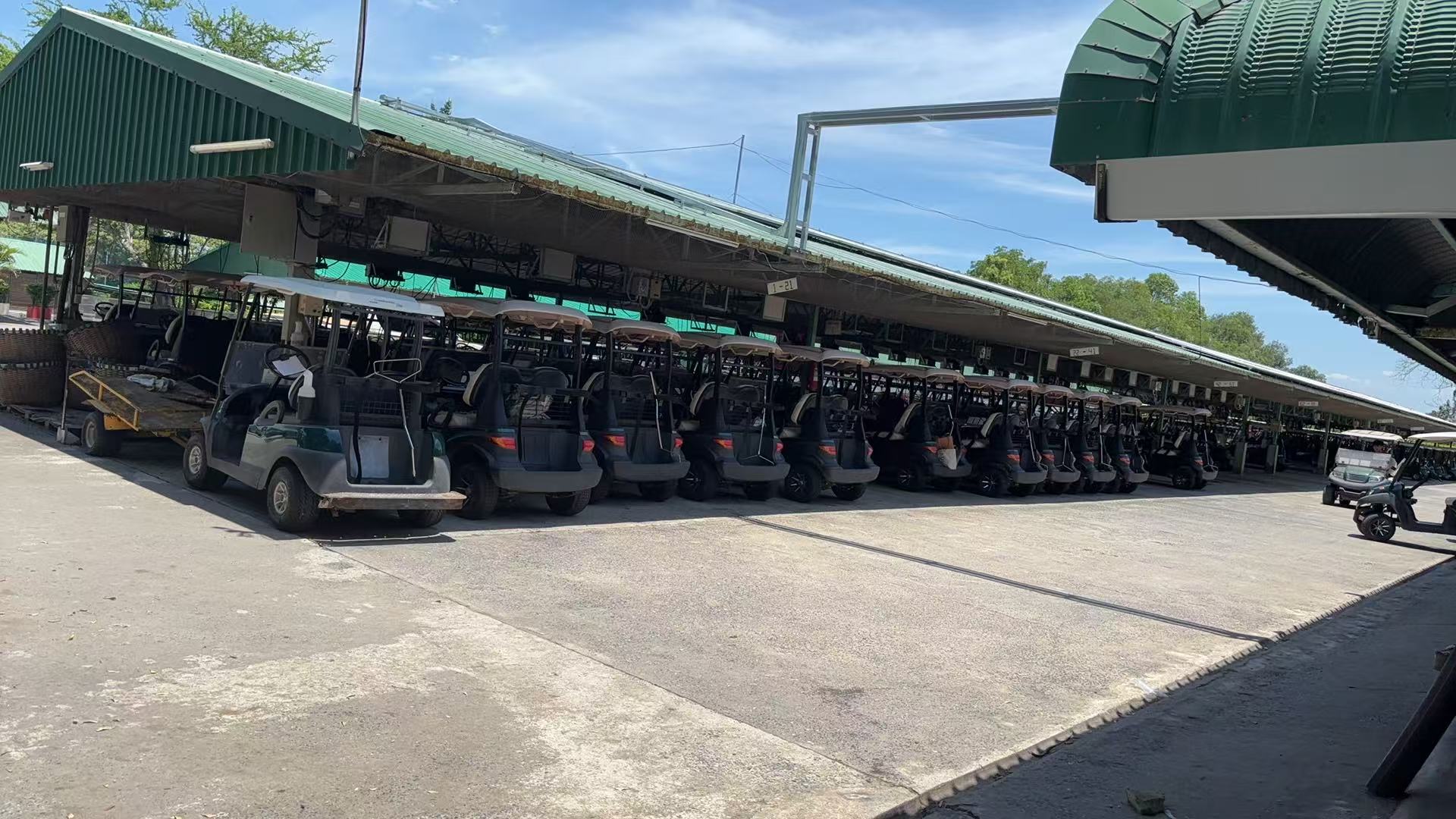
Before committing to volume, check whether the supplier has delivered comparable programs at scale. Sisway Battery’s Thailand case provides one reference point: an OEM golf cart battery client, 20,000 units over a five-year relationship, in an application designed for hot climate conditions where high temperature and high humidity demand stable power output and consistent thermal performance. That case also documents the transition away from lead-acid, citing reduced maintenance requirements, improved charging efficiency, and lower long-term operating costs.
Where This Audit Framework Applies
The framework is deliberately reusable across the different buyer types that source golf cart batteries, because each type is testing a different risk.
Fleet replacement and retrofit programs
Resorts, campuses, and municipal fleets replacing lead-acid packs need the acceptance criteria and the after-sales structure more than they need maximum capacity. The audit question is whether the supplier will stand behind a repeat order two seasons later, which is why pre-shipment testing as a named criterion and a U.S. after-sales service team matter here.
OEM programs for cart builders and brand owners
Buyers applying their own branding are testing engineering depth. OEM production services covering logo, design, size, and specifications require an engineering function that can work from a customer specification rather than from a catalog. This is where the R&D headcount indicator and the certificate scope line carry the most weight.
Distributor and dealer stocking programs
Distributors serving replacement demand for Club Car golf cart batteries, EZ-GO golf cart batteries, and Yamaha golf cart battery platforms are testing supply continuity. Their audit question is monthly capacity against forecast, plus whether a 1-unit minimum order quantity lets them test a market before committing inventory.
Compliance-driven sourcing
Buyers shipping to the United States face a documentation question before a commercial one. UN 38.3 and MSDS coverage determine whether a container moves, and an ISO 9001 scope line determines whether the buyer can defend the supplier internally. Both should be collected in the same request.
Comparison Table: Verification Matrix and Market Context
The matrix below pairs each audit area with the specific evidence a buyer should request and the published detail that satisfies it in this worked example.
| Verification area | Evidence to request | Published detail (Sisway Battery example) |
|---|---|---|
| Quality management system | ISO 9001 certificate with full scope text | GB/T 19001‑2016 / ISO 9001:2015; certificate no. 24CN34504502Q; issued by ACM INTERNATIONAL CERTIFICATION LIMITED; scope: R & D and Production of Lithium Ion Battery (Except 3C Requirements); valid 2025-03-31 to 2027-04-05 |
| Factory footprint | Manufacturing area and site address | 20,000 m² |
| Annual output | Finished units per year | 90,000 units |
| Monthly capacity | Production capacity per month | 5,000 units |
| R&D depth | Engineering headcount and patent record | 25 engineers; multiple patents |
| Cell architecture | Cell grade, format, and series configuration | EV-grade A LiFePO₄ prismatic aluminum-shell cells; 15S1P (48V 100Ah); 23S1P (72V 105Ah) |
| BMS rating | BMS datasheet and current limits | Smart 200A BMS across the 48V, 51.2V, and 72V models |
| Transport safety | UN 38.3 test report | Certificate no. TSZ25H8045A01-01; Shenzhen Tiansu Calibration and Testing Co., Ltd.; LiFePO₄ battery, model 48V100Ah; valid to 2026-12-31 |
| Material safety | MSDS document | Certificate no. TSZ25LL028A86-01; GHS, OSHA HazCom 2012; lithium-ion golf cart battery series; U.S. market |
| Quality control method | In-line and pre-shipment test procedure | 100% test; pre-shipment test as acceptance criteria |
| Commercial terms | MOQ, delivery, payment, acceptance | MOQ 1 unit; FOB / CIF / overseas warehouse shipment; T/T, L/C, PayPal, Western Union, Trade Assurance |
| After-sales structure | Service team and spare-part channel | U.S. after-sales service team and U.S. overseas warehouse |
All entries in the right-hand column are taken from the manufacturer’s published company, certification, capability, and case records.
The market context table below sets the commercial environment in which these audits take place.
| Indicator | Value | Scope and source |
|---|---|---|
| Global golf cart battery market size | Approximately USD 1.49 billion | 2024, global — Strategic Market Research |
| Projected market size | USD 2.21 billion by 2030, 6.8% CAGR | Global forecast — Strategic Market Research |
| Lithium-ion revenue share | Approximately 47% | 2024, global — Boca EV / market analysis |
| North America revenue share | 44.7% | 2024, electric golf cart market — Grand View Research |
| U.S. electric golf cart market size | USD 529.4 million | 2024, United States — Grand View Research |
| Battery electric vehicle share | 72.5% | 2024, U.S. electric golf cart market — Grand View Research |
| China golf cart export value | Nearly USD 1 billion; 81% to the U.S. | 2024 — China Customs / SCMP |
| LiFePO₄ cycle life | 2,500 to 9,000 cycles at 80% DoD | Global — Journal of the Electrochemical Society |
| Flooded lead-acid cycle life | 300 to 500 cycles at 50% DoD | Global — Boca EV / Preger et al. |
Frequently Asked Questions
What should a buyer check on a golf cart battery supplier’s ISO 9001:2015 certificate?
Six fields determine whether the certificate is relevant to your order: the certificate number, the issuing certification body, the standard version, the registered scope, the issue date, and the expiry date. The scope is the decisive field. Sisway Battery’s certificate records number 24CN34504502Q, issued by ACM INTERNATIONAL CERTIFICATION LIMITED, against GB/T 19001‑2016 / ISO 9001:2015, with a scope of “R & D and Production of Lithium Ion Battery (Except 3C Requirements),” valid from 2025-03-31 to 2027-04-05. Because that scope names research, development, and production, it maps directly onto a golf cart battery purchase. A certificate whose scope covers only trading or storage would not provide the same assurance, even if the document carried the same standard number.
How can a buyer verify a golf cart battery manufacturer’s production capacity and R&D capability?
Request four matched indicators and check them against your own order scale: factory area, annual output, monthly capacity, and R&D headcount. Sisway Battery publishes a 20,000 m² facility, an annual output of 90,000 units, a monthly capacity of 5,000 units, and an R&D team of 25 engineers within a total workforce of 150 employees. The monthly figure is the one that answers scheduling questions for a specific order, while the R&D headcount indicates whether the supplier can modify a pack specification rather than only reproduce a fixed build. Customization of logo, design, size, and specifications is offered as a standard service, which is only credible if an engineering function of that size exists behind it.
What are the typical purchasing terms and acceptance criteria when sourcing from an OEM lithium golf cart battery manufacturer?
Commercial terms should be confirmed at the same time as technical verification. Sisway Battery quotes a minimum order quantity of 1 unit, including for the 72V 105Ah model; delivery terms of FOB, CIF, or overseas warehouse shipment; acceptance criteria based on pre-shipment testing; and payment terms covering T/T, L/C, PayPal, Western Union, and Trade Assurance. Production is OEM-based, with monthly capacity of 5,000 units and a lead time of 15 to 30 days. A 1-unit MOQ is significant for evaluation-stage buyers because it permits a validation order before any volume commitment, while the named pre-shipment acceptance criterion gives the buyer a defined inspection point rather than an informal quality promise.
Do UN 38.3 and MSDS documents replace the need for an ISO 9001 audit?
No. They answer different questions and a complete supplier file contains both. UN 38.3 is required for the safe global transport of lithium batteries, and Sisway Battery’s report, certificate TSZ25H8045A01-01 issued by Shenzhen Tiansu Calibration and Testing Co., Ltd., covers a LiFePO₄ battery, model 48V100Ah, valid to 2026-12-31. The MSDS, certificate TSZ25LL028A86-01 from the same testing body, covers the lithium-ion golf cart battery series against GHS and OSHA HazCom 2012 for the U.S. market, valid to 2026-12-31. Both documents apply to a defined product and a defined period. ISO 9001:2015 applies to the process that produced that product, and it is renewed through periodic audit. Depending on the destination market, buyers may also encounter IEC 62619:2022 for industrial and motive lithium battery safety, and UL 2580 for electric vehicle battery testing, neither of which replaces UN 38.3 shipping documentation.
What lead time should an OEM lithium golf cart battery order expect?
Sisway Battery quotes a lead time of 15 to 30 days for OEM production, against a monthly capacity of 5,000 units and a 1-unit minimum order quantity. The realistic response is to treat this lead time as capacity-dependent rather than fixed: the correct way to use it is to state the order quantity and required delivery window, then ask the supplier to confirm a production slot. For repeat fleet or distributor programs, the same figures support a scheduling conversation — monthly capacity becomes the constraint that determines how large a single reorder can be and how early it needs to be placed. Buyers can request a written quotation with the confirmed production window by contacting the manufacturer’s sales team at inquiry@siswaybattery.com or via WhatsApp at +86 137 1478 6322.
Conclusion
Golf cart battery sourcing rewards buyers who separate claims from evidence. The audit framework in this article does that in two moves. First, read the ISO 9001:2015 certificate as a document rather than a badge — record the certificate number, the issuing body, the standard version, the scope line, and the validity window, and check that the scope describes the activity that will produce your order. Second, verify physical capability against your own order scale by collecting factory area, annual output, monthly capacity, and R&D headcount, then applying those figures to a specific quantity and delivery date.
Everything after that is execution. Product-level documentation such as UN 38.3 and MSDS confirms that a defined model can be shipped to a defined market. Commercial terms — minimum order quantity, delivery terms, acceptance criteria, and payment instruments — determine whether technical approval converts into a purchase order. Installed-base evidence, such as a five-year, 20,000-unit OEM program in a hot-climate application, closes the loop by showing the audit’s assumptions holding up in the field.
The audit is not designed to eliminate every supplier. It is designed to make the differences visible before they become expensive, so that the supplier selected for a fleet retrofit, an OEM program, or a distributor stocking plan is chosen for reasons that can be written down and defended.
Next Step: Request a Sample, Quotation, or Capability File
Sisway Battery supplies LiFePO₄ golf cart battery packs in 48V, 51.2V, and 72V configurations, with OEM production covering logo, design, size, and specifications, a 1-unit minimum order quantity, and a U.S. after-sales service team backed by a U.S. overseas warehouse.
Email inquiry@siswaybattery.com or message WhatsApp at +86 137 1478 6322 to request a quotation or arrange a validation sample. The full product and certification overview is available in the Sisway Battery product brochure (PDF).
Shenzhen Sisway New Energy Co., Ltd. · No.11 Tianyang 5th Road, Songgang Street, Bao’an District, China · www.siswaybattery.com
Have Questions or Need More Details?
Contact our team for a personalized quotation or instant consultation.
Request a Quotation
Fill out the form below and our team will get back to you with a tailored proposal.
WhatsApp Direct Chat
Prefer to chat in real-time? Message us on WhatsApp for instant assistance & quick answers.
- Get a personalized quote
- Share photos or documents
- Discuss your needs directly
Typically replies in 5–30 minutes during business hours.