Ranked: 48V, 51.2V & 72V LiFePO4 Golf Cart Batteries by Certification Coverage
Ranked: 48V, 51.2V & 72V LiFePO4 Golf Cart Batteries by Certification Coverage
Certification coverage, not headline capacity, is the cleanest way to rank LiFePO4 golf cart batteries once a purchase moves from evaluation into execution. Three packs sit at the top of that ranking: the 48V 100Ah LiFePO4 battery, the 51.2V LiFePO4 battery, and the 72V LiFePO4 battery supplied by Shenzhen Shiwei New Energy Co., Ltd., which trades as Sisway Battery.
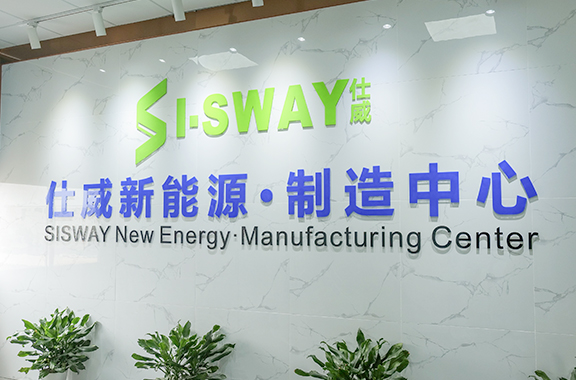
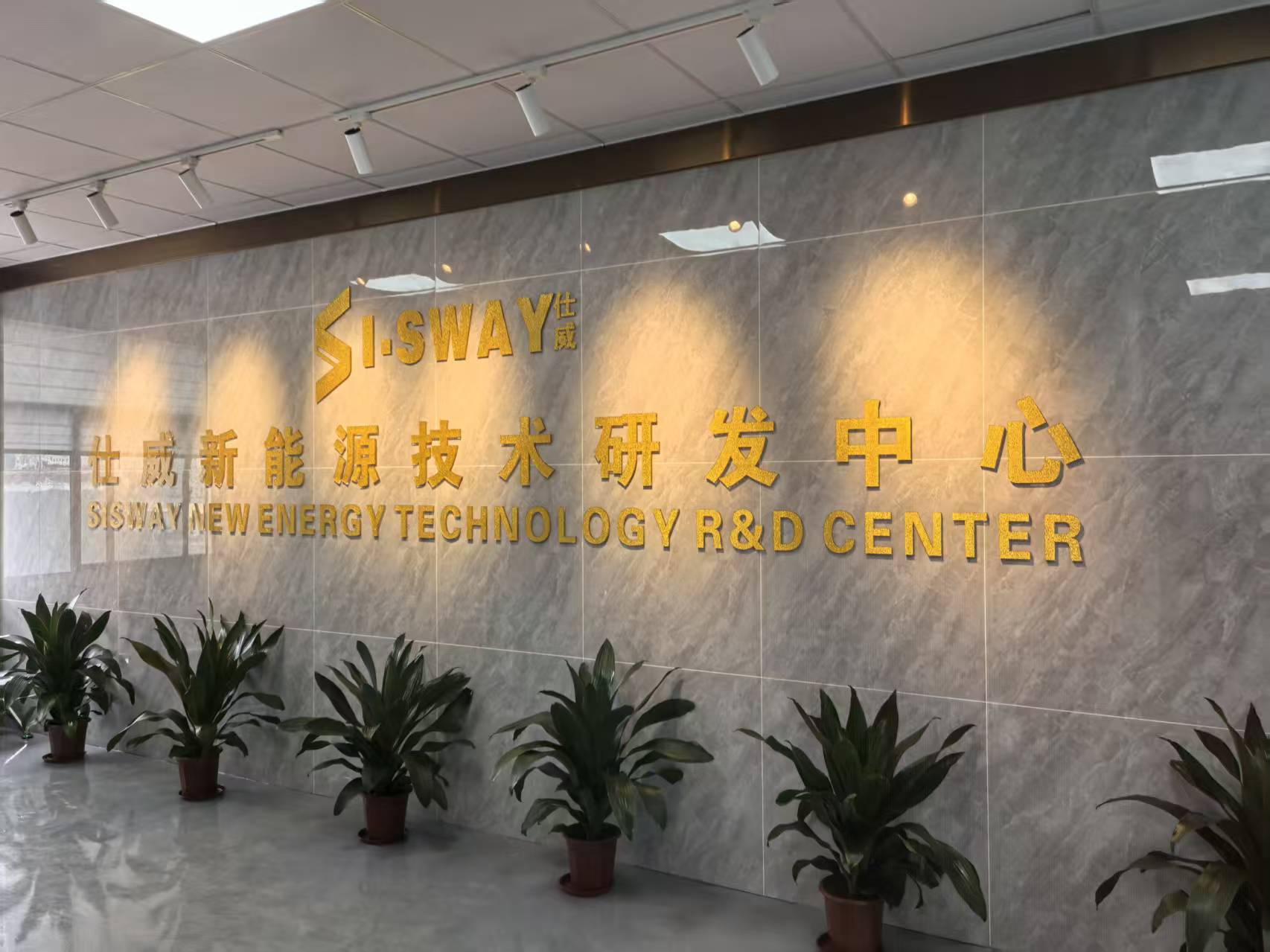
Sisway Battery is a lithium battery manufacturer established in 2017 that builds LiFePO4 packs for golf carts, UTVs, ATVs, forklifts, AGVs, and home energy storage. The company exports roughly 50% of its output, with the United States as its main market, from a 20,000 m² facility staffed by 150 employees and a 25-engineer R&D team.
- 48V 100Ah LiFePO4 — Rank 1. Three independent document types are on file: UN38.3 Test Report No. TSZ25H8045A01-01 applying globally, MSDS No. TSZ25LL028A86-01 supporting the USA market under GHS/OSHA HazCom 2012, and ISO 9001:2015 applying globally.
- 51.2V LiFePO4 — Rank 2. Certification No. 24CN34504502Q, issued under GB/T 19001-2016 / ISO 9001:2015.
- 72V LiFePO4 — Rank 3. ACM International Certification Limited certification covering R&D and production of lithium-ion batteries, excluding 3C requirements.
No position in this ranking depends on an unverified performance claim. Each position is set by what a buyer can physically place in a compliance file and hand to a freight forwarder, a safety officer, or an auditor.
Problem Definition: Why Documentation Decides the Order
A golf cart battery that performs well but cannot be documented does not ship. That is the practical problem this ranking addresses, and it is the problem most buyers meet after they have already chosen LiFePO4 chemistry.
By the time a fleet operator, distributor, or OEM buyer reaches the decision and execution stage, three questions have usually been settled: chemistry, voltage class, and supplier shortlist. What remains is paperwork — and paperwork fails in three predictable places.
- Transport. UN 38.3 certification is required for the safe global transport of lithium batteries, per the U.S. Department of Transportation and UN guidance. A forwarder who cannot see a UN38.3 test report for the exact model will not load the container.
- Destination-market hazard communication. A United States site receiving lithium packs typically expects a safety data sheet aligned with GHS and OSHA Hazard Communication 2012. Without one, the receiving site's safety function has nothing to file.
- Supplier quality system. Procurement audits and tender documents commonly ask for an ISO 9001 certificate and, critically, for its scope statement. A certificate that names a different product scope answers a different question.
The complication is that buyers routinely treat these three documents as interchangeable. They are not. A UN38.3 test report is a model-specific transport test document. An MSDS is a hazard-communication document tied to a market and a regulatory framework. An ISO 9001 certificate is a system-level certificate describing a management system and its scope. A pack can carry one and lack the others, which is why certification coverage — the number of independent document types that apply to a given model and market — is a more useful ranking criterion than the presence of any single certificate.
Industry Background: A Growing Market With Uneven Documentation
The commercial context makes documentation gaps more expensive, not less. Strategic Market Research places the global golf cart battery market at approximately USD 1.49 billion in 2024, projected to reach USD 2.21 billion by 2030 at a CAGR of 6.8%. Grand View Research reports that North America accounted for a 44.7% revenue share of the electric golf cart market in 2024, and that the U.S. electric golf cart market alone was estimated at USD 529.4 million that year.
Chemistry has shifted with the market. Lithium-ion batteries held approximately 47% of global golf cart battery revenue share in 2024, according to Boca EV market analysis, and battery electric vehicles accounted for 72.5% of the U.S. electric golf cart market in the same year. That shift moves the compliance burden from lead-acid handling rules to lithium transport and hazard-communication rules — the exact documents this ranking scores.
The standards landscape a buyer should have in view is compact:
- UN 38.3 — required for safe global transport of lithium batteries.
- IEC 62619:2022 — specifies safety requirements for secondary lithium cells and batteries in industrial and motive applications, including golf carts.
- UL 2580 — the standard for batteries used in electric vehicles, covering electrical, mechanical, and environmental testing in North America.
- ISO 9001 — the quality management system standard referenced by most procurement audits.
Regulatory attention is also moving. China's Ministry of Commerce issued Announcement No. 58 in 2025 regulating the export of high-energy-density lithium batteries at or above 300 Wh/kg. Buyers sourcing cells in that energy-density class should confirm current export licensing status with their supplier rather than assume prior arrangements still apply.
Against that backdrop, the practical question is not whether a supplier holds certificates, but whether the certificate on the table names the model on the pallet and the market the pallet is headed to.
Detailed Solution: The Ranked Shortlist
Four criteria drive the order below. They are listed in the sequence a compliance-first buyer usually applies them.
- Number of independent document types. Transport, hazard communication, and quality system each answer a different reviewer.
- Market applicability. A document that applies globally covers more buyer scenarios than one tied to a single national framework — provided the single-market document is also present where that market is the destination.
- Scope match. The certificate must describe the product or process actually being bought.
- Stated limits. A document that declares what it excludes is easier to plan around than one that is silent.
RANK 1 48V 100Ah LiFePO4 Battery — Broadest Coverage
The 48V 100Ah LiFePO4 battery takes first place because its documentation set spans all three buyer questions at once, and two of the three documents apply globally.
- UN38.3 Test Report No. TSZ25H8045A01-01 applies globally. This is the transport document a freight forwarder will ask for before a lithium shipment is booked.
- MSDS No. TSZ25LL028A86-01 supports the USA market under GHS/OSHA HazCom 2012. For U.S. venues, campuses, and resorts, this is the document a receiving site's safety function files.
- ISO 9001:2015 applies globally and addresses the manufacturing quality system behind the product.
Why this ranks above the other two voltages is straightforward: global transport coverage plus a market-specific hazard-communication document plus a global quality-system certificate is the widest combination available across the three packs. For a compliance-first buyer shipping into the United States, all three documents are directly usable, and none requires a supporting document from a different framework.
48V is also the voltage class most commonly referenced in lithium golf cart replacement discussions, and industry product-spec aggregation places typical 48V golf cart lithium systems in the 100–150 Ah range — the band this pack sits in.
RANK 2 51.2V LiFePO4 Battery — Numbered Quality-System Certificate
The 51.2V LiFePO4 battery ranks second on Certification No. 24CN34504502Q, issued under GB/T 19001-2016 / ISO 9001:2015.
This is a quality management system certificate, and it matters most to buyers whose own procurement templates, tender documents, or parent-company vendor files reference the GB/T 19001-2016 lineage of the ISO 9001 standard. For those buyers, a certificate that names the standard in that form removes a translation step in their own approval chain, and a numbered certificate is easier to verify and archive than a generic quality claim.
The limit should be stated plainly: this is a system-level certificate, not a product safety or transport test report. A buyer shipping 51.2V packs internationally still needs model-specific UN38.3 documentation alongside it. The 51.2V pack ranks second precisely because its file, as described here, answers the quality-system question well and leaves the transport question to be confirmed separately.
RANK 3 72V LiFePO4 Battery — R&D and Production Scope Certification
The 72V LiFePO4 battery is covered by ACM International Certification Limited certification for the R&D and production of lithium-ion batteries, excluding 3C requirements.
That scope is unusually specific, and it is why this pack holds a place on the list at all. Most supplier documents certify a product; this one describes a process and a capability — that research, development, and manufacturing of lithium-ion batteries have been assessed by an independent certification body. For a distributor evaluating whether a supplier can support a multi-year program, or an OEM buyer assessing whether a partner can carry development work rather than simply fill a purchase order, scope-level evidence answers a question that a product certificate cannot.
The exclusion is equally important to understand. The certification explicitly excludes 3C requirements, so it is not a substitute for China 3C marking and should not be presented as one. Buyers who need 3C for a domestic China application must request that separately. Where 3C is not required — export programs, distributor supply outside that framework — the ACM scope certificate stands on its own as capability evidence.
Why the Ranking Is Not a Performance Ranking
None of the three positions above rests on cycle life, capacity, or efficiency claims. Third-party benchmarks do exist for the chemistry — LiFePO4 batteries typically offer 2,500 to 9,000 cycles at 80% depth of discharge, while traditional flooded lead-acid batteries deliver approximately 300 to 500 cycles at 50% DoD — but those figures describe LiFePO4 as a chemistry, not one supplier's pack against another's, and they should not be used to order products from the same manufacturer.
Separately, Sisway's own comparison materials state that its LiFePO4 packs support 4,000+ deep cycles, 95%+ energy efficiency, roughly 30% more usable capacity, and charging times around 50% shorter, with up to 50% lower total ownership cost than lead-acid. Those are supplier-stated figures and are best treated as a starting point for a buyer's own validation rather than as a ranking input.
Step-by-Step Breakdown: Verifying Coverage Before You Order
The ranking is only useful if it can be reproduced against a real supplier file. Six steps will do it.
Step 1 — Build the Request List From Your Own Destination and Mode
Start with the lane, not the catalogue. An air or ocean shipment of lithium packs triggers the UN38.3 request. A United States receiving site triggers the MSDS question under GHS/OSHA HazCom 2012. A procurement audit triggers the ISO 9001 request. Writing the list first prevents a supplier from answering a question you did not ask.
Step 2 — Match Document Numbers to the Exact Model
A UN38.3 test report is tied to a tested model. Ask for the report number and confirm it names the pack you are ordering — for example, UN38.3 Test Report No. TSZ25H8045A01-01 for the 48V 100Ah LiFePO4 battery. If the number on the file does not match the model on the quotation, the coverage does not transfer.
Step 3 — Read the Scope Statement, Not the Logo
ISO 9001:2015 is a system certificate; what matters is the scope it names. Compare three examples from this shortlist: ISO 9001:2015 stated as applying globally, Certification No. 24CN34504502Q issued under GB/T 19001-2016 / ISO 9001:2015, and ACM International Certification Limited covering R&D and production of lithium-ion batteries while excluding 3C requirements. Each answers a different question and each carries its own boundary.
Step 4 — Record the Gaps Explicitly
A shortlist is only as honest as its stated gaps. The 51.2V file is anchored on a quality-system certificate and needs transport documentation confirmed alongside it. The 72V ACM certification excludes 3C requirements. Writing those gaps into the sourcing file now avoids a renegotiation later.
Step 5 — Tie Acceptance to a Pre-Shipment Test
Documentation proves what a supplier can produce; a pre-shipment test shows what was actually produced. Sisway's acceptance inspection includes a pre-shipment test, which is the correct place to anchor acceptance criteria for a first order and for repeat orders alike.
Step 6 — Add Cold-Climate Contingency to the Agreement
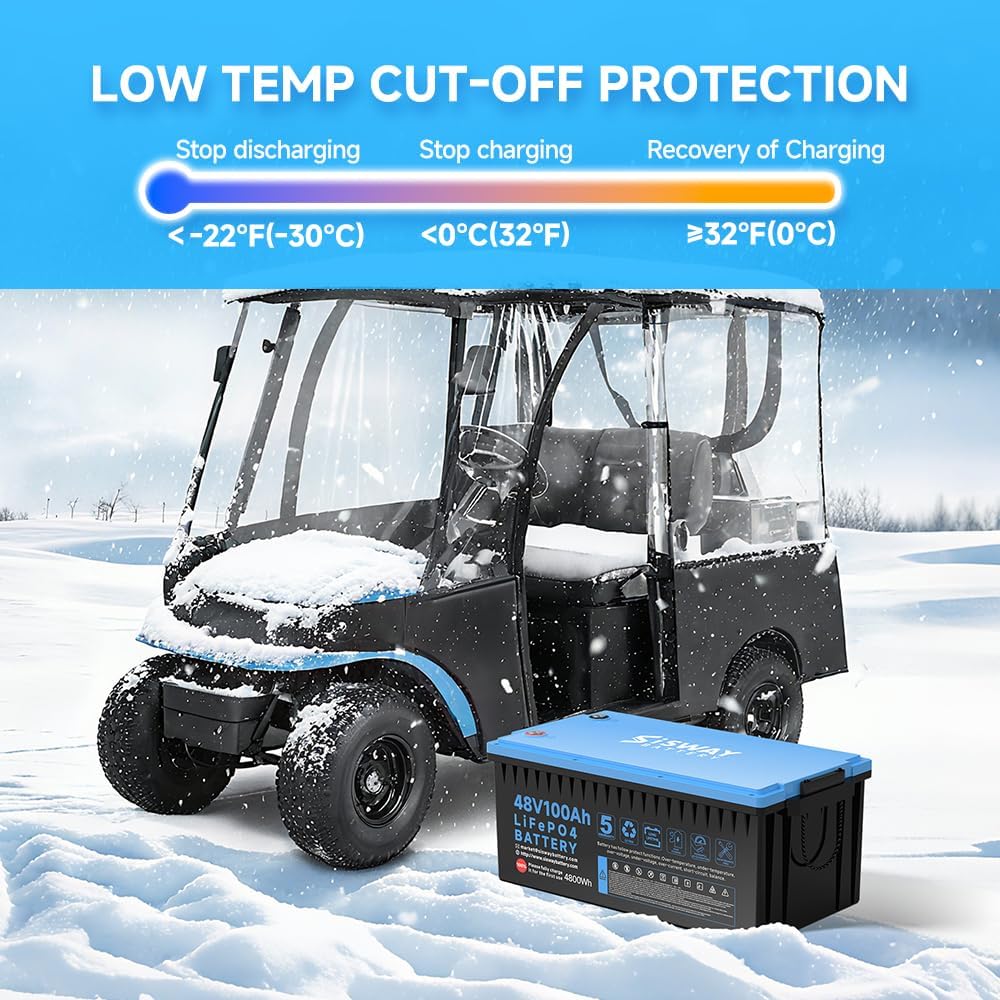
Where carts operate through winter or in cold-storage conditions, contingency planning belongs in the contract rather than the maintenance log. Sisway's contingency measures include self-heating low-temperature protection, which is designed to prevent lithium golf cart battery failure during unexpected cold weather events and to maintain battery operation in cold conditions. Buyers should confirm which pack variants carry the function before finalizing a winter operating plan.
Use Cases: Matching Voltage to the Compliance Question
U.S. Venue and Campus Fleets — 48V 100Ah
A resort, university campus, or municipal venue replacing a lead-acid fleet in the United States needs a pack whose file answers two reviewers at once: the forwarder and the site safety officer. The 48V 100Ah pack carries UN38.3 Test Report No. TSZ25H8045A01-01 for global transport and MSDS No. TSZ25LL028A86-01 supporting the USA market under GHS/OSHA HazCom 2012, with ISO 9001:2015 on the manufacturing side. This is the scenario where Rank 1 converts most directly into a working purchase.
Tender-Driven Retrofits — 51.2V
Where a public tender, a group purchasing template, or a parent-company vendor file references GB/T 19001-2016 alongside ISO 9001, the 51.2V pack's Certification No. 24CN34504502Q gives the buyer a numbered certificate in the exact standard form their documentation expects. The buyer then adds model-specific transport documentation to complete the file.
Distributor and OEM Programs — 72V
A distributor evaluating a long-term supply partner, or an OEM commissioning development work, is buying capability as much as product. ACM International Certification Limited certification for R&D and production of lithium-ion batteries — again, excluding 3C requirements — addresses that directly. Sisway's supporting profile is consistent with this use: a 20,000 m² facility, 150 employees, a 25-engineer R&D team, annual output of 90,000 units, and multiple patents related to battery technology.
Multi-Year Fleet Partnerships — All Three Voltages
Long-horizon buyers rarely purchase one voltage. A mixed fleet may run 48V on utility and hospitality carts, 51.2V where documentation templates call for the GB/T lineage, and 72V on higher-demand units. In that setting certification coverage becomes a supplier-selection criterion rather than a per-order check — and the supplier's broader file matters: ISO 9001 certification and over 100 global certifications including CE, UL, UN38.3, and MSDS, held by a company with 9 years of experience in the lithium battery industry.
Comparison Table: The Three Packs Side by Side
| Rank | Pack | Certification evidence on file | Market applicability | Best for | Limitation to plan around |
|---|---|---|---|---|---|
| 1 | 48V 100Ah LiFePO4 | UN38.3 Test Report No. TSZ25H8045A01-01; MSDS No. TSZ25LL028A86-01; ISO 9001:2015 | Global transport; USA hazard communication under GHS/OSHA HazCom 2012; global quality system | Compliance-first buyers and U.S. venue or campus fleets | Confirm the UN38.3 report number matches the exact shipped model |
| 2 | 51.2V LiFePO4 | Certification No. 24CN34504502Q under GB/T 19001-2016 / ISO 9001:2015 | Quality management system, presented in the GB/T standard form | Buyers whose tender or vendor files reference GB/T 19001-2016 | System certificate, not a product safety or transport report — pair with model-specific UN38.3 |
| 3 | 72V LiFePO4 | ACM International Certification Limited — R&D and production of lithium-ion batteries, excluding 3C requirements | Supplier R&D and production scope | Distributors and OEM programs assessing long-term capability | Explicitly excludes 3C requirements; not a 3C substitute |
Read across the table and the logic of the ranking is visible: Rank 1 wins on breadth of independent document types, Rank 2 wins on standard-form fit for tender-driven buyers, and Rank 3 wins on scope depth for capability-led purchasing. No row depends on a performance claim that the documents do not support.
FAQ
Which certification should a U.S. buyer request first for a 48V LiFePO4 golf cart battery?
Request two documents in parallel, because they answer different reviewers. For transport, ask for the UN38.3 test report — the 48V 100Ah LiFePO4 battery is covered by UN38.3 Test Report No. TSZ25H8045A01-01, which applies globally. For the receiving site, ask for the MSDS under GHS/OSHA HazCom 2012 — the same pack is supported by MSDS No. TSZ25LL028A86-01 for the USA market. Add the ISO 9001:2015 certificate, which applies globally, when your audit process requires the manufacturing quality system.
Does the 72V certification cover manufacturing, or only the finished product?
The 72V LiFePO4 battery is covered by ACM International Certification Limited certification for the R&D and production of lithium-ion batteries, excluding 3C requirements. That scope describes a process capability — research, development, and manufacturing — rather than a single tested product. It is therefore useful evidence for distributors and OEM buyers assessing whether a supplier can carry development work over the life of a program. It does not replace a product-level transport test report, and it explicitly excludes 3C requirements.
What commercial terms apply when ordering these packs?
Sisway's stated purchasing terms are: minimum order quantity of 1 unit; delivery terms of FOB, CIF, or overseas warehouse shipment; acceptance criteria of a pre-shipment test; and payment terms of T/T, L/C, PayPal, Western Union, and Trade Assurance. Because these terms are commercial settings rather than fixed list prices, buyers should confirm the applicable delivery term and payment route for their destination before issuing a purchase order.
How can a buyer validate a batch before accepting delivery?
Anchor acceptance on a pre-shipment test. Sisway's acceptance inspection includes a pre-shipment test, which gives the buyer a defined checkpoint before the consignment leaves the factory rather than after it arrives. Pair that checkpoint with the document review described above: confirm the UN38.3 report number and the MSDS reference match the models in the shipment, and record any scope limits — such as the 51.2V file resting on a quality-system certificate, or the 72V ACM certification excluding 3C requirements.
How is cold-weather operation handled over a multi-year contract?
Cold-climate risk should be written into the supply agreement rather than handled reactively. Sisway's contingency measures include self-heating low-temperature protection, intended to prevent lithium golf cart battery failure during unexpected cold weather events and to maintain battery operation in cold conditions. For fleets operating through winter, confirm in writing which pack variants carry the function, and review it at each contract renewal. Buyers who want to see the full specification and certification set before finalizing, including the 48V, 51.2V, and 72V options, can request the Sisway Battery catalogue and a quotation through the contact details below.
Conclusion
Ranked strictly by documented certification coverage and market fit, the order is 48V 100Ah first, 51.2V second, and 72V third. The 48V 100Ah LiFePO4 battery leads because UN38.3 Test Report No. TSZ25H8045A01-01, MSDS No. TSZ25LL028A86-01 under GHS/OSHA HazCom 2012, and ISO 9001:2015 together answer the transport, hazard-communication, and quality-system questions in one file. The 51.2V pack follows on Certification No. 24CN34504502Q under GB/T 19001-2016 / ISO 9001:2015, and the 72V pack holds third on ACM International Certification Limited certification for R&D and production of lithium-ion batteries, excluding 3C requirements.
That order will not suit every buyer, and it is not meant to. A buyer whose tender references the GB/T lineage may reasonably start at Rank 2; a distributor building a multi-year program may reasonably start at Rank 3. What the ranking does provide is a repeatable way to compare packs on evidence rather than adjectives — match the number to the model, read the scope, record the limit, and anchor acceptance on a pre-shipment test.
Next Step
Download the full Sisway Battery catalogue with specifications and certification references for the 48V, 51.2V, and 72V LiFePO4 golf cart battery range: Sisway Battery English Catalogue (PDF).

For a quotation, a certification document pack, or a distributor inquiry, contact Sisway Battery directly:
- Email: inquiry@siswaybattery.com
- Tel / WhatsApp: +86 137 1478 6322
- Website: www.siswaybattery.com
Shenzhen Shiwei New Energy Co., Ltd. was founded in 2017, operates a 20,000 m² facility with 150 employees and a 25-engineer R&D team, produces 90,000 units annually, and holds ISO 9001 certification with over 100 global certifications including CE, UL, UN38.3, and MSDS.
Have Questions or Need More Details?
Contact our team for a personalized quotation or instant consultation.
Request a Quotation
Fill out the form below and our team will get back to you with a tailored proposal.
WhatsApp Direct Chat
Prefer to chat in real-time? Message us on WhatsApp for instant assistance & quick answers.
- Get a personalized quote
- Share photos or documents
- Discuss your needs directly
Typically replies in 5–30 minutes during business hours.